When it comes to pastors and social media, two things are increasingly common:
- Pastors wondering whether to leverage it or how to do so
- When they do, onlookers wondering if they’re “trying to be a celebrity pastor” (response to this at end of post)
While much more could be said, here are some initial reasons pastors should consider leaning in and some “watch-outs” as you do…
4 REASONS FOR PASTORS TO USE SOCIAL MEDIA
Preemptive caveat: You are called to run the race marked out for YOU. Not every pastor will feel called or have a grace to engage in social media, nor should they. These are just 4 reasons to consider it.
- Social media is a way for shepherds to stay connected to the sheep. Pastors are shepherds and it’s been said, “Good shepherds smell like sheep.” In other words, we’re called to “shepherd the flock of God AMONG YOU” (1 Peter 5:2) –– so we have to be among them! The average American spends ~15hrs/week on social media (SOURCE). When used strategically, pastors can use social media to stay connected to the flock throughout the week. As an example, my friend Pastor Jonathan Pokluda does a weekly “Ask Me Anything” in his Instagram stories, responding to practical pastoral and theological questions that his people ask.
- Social media is the modern day Areopagus. When Paul was in Athens, he went straight to a place called the “Areopagus.” The Areopagus was a place where 1st century cultural influencers would debate ideologies and controversial questions of the day. Because Paul was the greatest missionary who ever lived, he bee-lined here to contend for the truth of the gospel among competing ideologies. Social media is the Areopagus of our day –– where both the people we are trying to REACH and the people we are trying to PASTOR “spend their time telling and hearing the latest [ideologies].” Very frankly, if the church won’t disciple people, the world will. And a refusal to enter the ideological fray of social media where our people are spending 15hrs/week hearing everyone else contend for false gospels and godless ideologies might be to “leave the sheep to the wolves.” Further, social media can be leveraged to address critical cultural issues and events without your pulpit getting hijacked by the headline of the week.
- Social media is a way to “go into all the world.” Currently, there are 5.07 billion social media users representing 62.6% of the world’s population (SOURCE: Statista). If there were a nation containing 5 billion people and we refused to send any missionaries there, that would be called a colossal mission-failure.
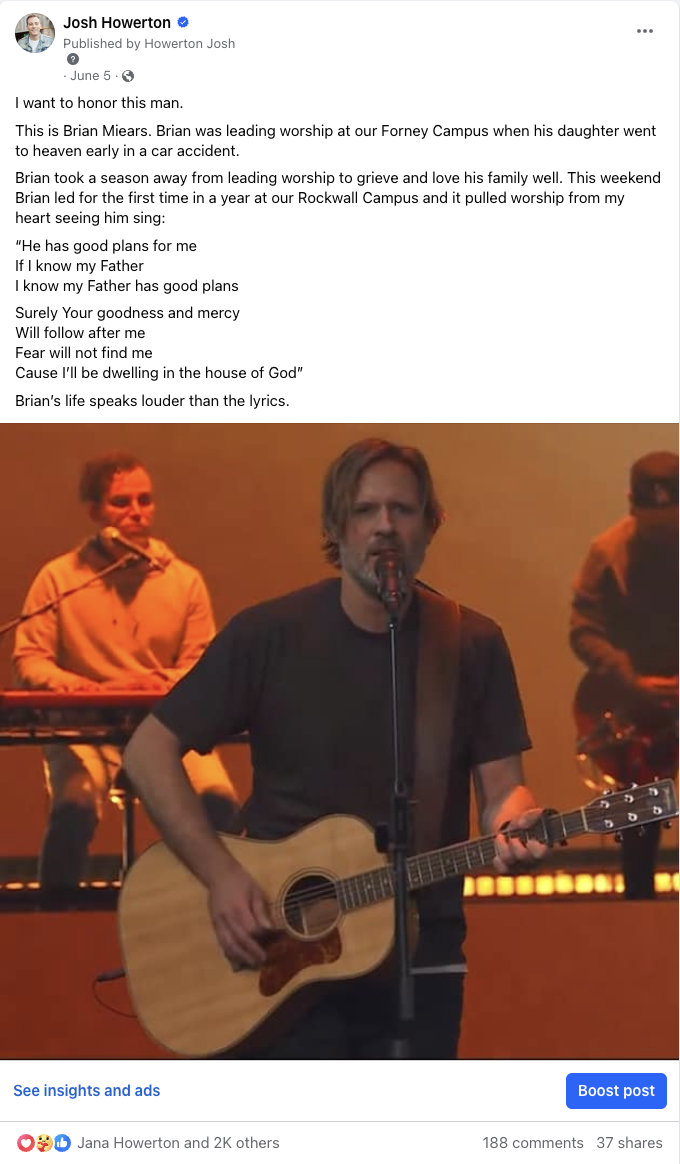
- Social media is a way to celebrate and honor people. This has become my favorite way to use social media. In any church, there are more volunteers and leaders deserving of public honor than we have time to give at public gatherings. Social media is an incredible way to “give honor where honor is due.” Here’s an example:
4 WATCH-OUTS FOR PASTORS USING SOCIAL MEDIA
Like anything, the same social media that can be leveraged for good can be twisted for evil. Here are some watch-outs for pastors attempting to leverage it.
- Watch out for glory-hogging. A) We’re commanded to “do nothing from selfish ambition or vain conceit“, so to use social media for the purpose of increasing your personal name and renown is ungodly. But B) it’s also foolish, because as my friend Pastor Ray Ortlund has pointed out, God has designed the world so that people are attracted to humility and repulsed by pride. Watch out that you don’t appear cringey, coming off more like a Bachelor / Bachelorette contestant making their transition to “social media influencer” than a pastor.
- Watch out for death by distraction. If he wants to kill your calling, the devil doesn’t have to destroy you if he can distract you. While social media can be used as a helpful SUPPLEMENT to real-life leadership and ministry, it can’t be a REPLACEMENT for those things. A great way to become extremely ineffective in ministry is to let social media content-creation distract you from things like investing in volunteers, pastoring people, prayer, study, and planning. Personally, I hard-cap myself to about 1 hr/week on social media content right now, because I’ve found it will take as much time as I allow it.
- Watch out for being led by the algorithm instead of the Spirit and Word. Social media has trends that come and go. A message or “take” that got a lot of likes yesterday is irrelevant today… but our message is the same yesterday, today, and forever. If your measure of success is “engagement” instead of “faithfulness”, you fall into the pit of the Pharisees who lived “for the praise of men more than the praise of God.”
- Watch out for practicing your righteousness to be seen by men. This is always a pastoral tension, because on the one hand you’re COMMANDED to “let your light shine before men” and you want to “set an example”, but you’re FORBIDDEN from “practicing righteousness to be seen by men” and there’s no better mechanism for that sin than social media. Two practices I recommend to avoid this: 1) Consistently choose NOT to post about ministry or piety you do in secret. The internet doesn’t need a post about how great your quiet time was everyday or how you prayed with that widow. 2) Consistently use social media to praise the righteousness and sacrifice of OTHERS.
After careful consideration, at Lakepointe we believe it’s both evangelistically strategic and ecclesiologically helpful to maximize social media wisely. The next time someone sees a pastor leveraging social media and accuses him of “trying to be a celebrity pastor”, remember this: people choose to view things through the lens of either TRUST or SUSPICION. A lens of suspicion might look at it and say, “That guy is just trying to get famous and make it all about him. That’s gross.” A lens of trust might say, “That guy is trying to pastor his people during the week and contend for the gospel in our culture. That’s great.”